Sterilization vs Disinfection in Healthcare Infrastructure
In hospital environments—especially Operating Theaters (OT), CSSD, ICU, and Labs—understanding the difference between sterilization and disinfection is critical for infection control strategy, workflow planning, and equipment specification.
1️⃣ What Is Sterilization?
Sterilization is the complete destruction of all forms of microbial life, including bacterial spores. It represents an absolute microbiological state.
Microorganisms eliminated by sterilization Absolute
- Vegetative bacteria
- Fungi
- Viruses
- Mycobacteria
- Bacterial spores (key differentiator)
Primary Sterilization Methods
Steam Sterilization (Autoclaving) Most common
Widely used in hospitals for surgical instruments and linen packs.
- Typically 121°C (gravity cycle) or 132°C (pre-vacuum cycle)
- Standard for most reusable surgical items


Chemical Sterilants
Used for extended exposure when thermal methods are not feasible.
- Glutaraldehyde
- Hydrogen peroxide
- Peracetic acid
- Requires extended exposure time


Gas Sterilization (EtO)
For heat-sensitive equipment requiring low-temperature sterilization.
- Ethylene oxide (EtO)
- Requires aeration phase after the cycle


Hydrogen Peroxide Plasma
Modern low-temperature option with faster cycles for suitable devices.
- Low temperature system
- Fast cycle time
- Increasingly used in modern CSSD


2️⃣ What Is Disinfection?
Disinfection reduces microbial load to safe levels but does not reliably eliminate spores. It is a relative reduction process, not absolute.
High-Level Disinfection (HLD) Semi-critical
- Eliminates all microorganisms
- Does not reliably destroy high numbers of spores
- Used for semi-critical devices (e.g., endoscopes)
- Agents: glutaraldehyde, hydrogen peroxide
Intermediate-Level Disinfection (ILD)
- Effective against Mycobacterium tuberculosis
- Kills vegetative bacteria and most viruses
- Used on non-critical surfaces
Low-Level Disinfection (LLD)
- Kills most bacteria
- Effective against some fungi and viruses
- Used for environmental surfaces
Why it matters for contractors
Disinfection is strongly affected by surface materials, joint detailing, and accessibility for cleaning—all of which are infrastructure decisions.
Key Differences: Sterilization vs Disinfection
| Criteria | Sterilization | Disinfection |
|---|---|---|
| Spores | Destroyed | Usually not destroyed |
| Level | Absolute | Relative |
| Used For | Critical items (surgical instruments) | Semi-critical / non-critical items |
| Outcome | Sterile | Safe level of microbial reduction |
Rule of thumb: If an item enters sterile tissue or the bloodstream, it must be sterilized—not just disinfected.
Application in Hospital Zoning
From an engineering and contractor perspective, the selection between sterilization and disinfection is driven by risk classification and directly affects planning across OT and CSSD.
Risk-based application
- Critical items → Require sterilization (OT instruments, implants)
- Semi-critical items → High-level disinfection (endoscopes)
- Environmental surfaces → Intermediate or low-level disinfection
Direct impact on project design
- CSSD layout design
- Equipment specification
- Workflow separation (clean/dirty)
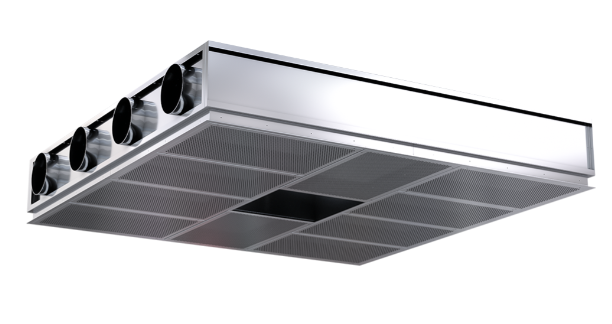
- HVAC contamination control
- Surface material selection
Factors Affecting Efficacy
Both sterilization and disinfection performance depend on process control and site discipline. Without proper cleaning, even the most advanced system may fail.
- Pre-cleaning (organic matter must be removed)
- Type of microorganism
- Chemical concentration
- Exposure time
- Temperature
- pH
- Surface compatibility
Engineering Insight for Healthcare Contractors
For healthcare infrastructure providers, sterilization should be approached as a workflow-and-system topic—not just a machine selection.
Project-level implications
- Sterilization capacity impacts CSSD room planning
- Surface materials affect disinfection durability
- Airflow control supports contamination reduction
- Equipment layout determines sterile workflow integrity
One sentence to remember
Sterilization is a process system, not just a machine.
This mindset aligns infection control, room zoning, HVAC, and material selection into one deliverable.
Note: This technical overview can be aligned with your project’s CSSD workflow, OT zoning, and material choices. If you want, ICARELIFE can support the contractor team with specification coordination for cleanroom-grade components. Contact ICARELIFE
FAQ
Q Does disinfection kill bacterial spores?
In general, disinfection does not reliably eliminate spores. Sterilization is required when spore destruction is necessary—especially for critical items.
Q When is sterilization required in hospitals?
Sterilization is required for critical items that enter sterile tissue or the bloodstream—such as surgical instruments and implants.
Q What is high-level disinfection used for?
High-level disinfection is commonly used for semi-critical devices (e.g., endoscopes) that contact mucous membranes but do not normally penetrate sterile tissue.
Q Why does pre-cleaning matter so much?
Organic residue can shield microorganisms from chemical agents or heat. Without proper cleaning, both disinfection and sterilization outcomes can be compromised.
Q How does this affect CSSD design?
Risk classification influences clean/dirty workflow separation, equipment sizing, zoning, HVAC strategy (pressure cascade), and surface material detailing for durable cleaning.