ICARELIFE — Market Survey
Modular Operating Theater Market: The Six Solution Models Explained
A neutral, system-level survey for hospital owners, planners and contractors comparing modular operating theater proposals — structured by responsibility boundary rather than brand claim.
Quick Answer
- A modular operating theater is a scope definition, not a product category or a single supplier type.
- Six solution models compete under the same label, each owning a different responsibility boundary.
- Performance is defined by standards — DIN 1946-4, HTM 03-01, ASHRAE 170, ISO 14644 — not by marketing terms.
- Compare proposals by who owns envelope, airflow, integration, validation and lifecycle service.
- Several leading European brands share one owner, so two bids are not always two independent bids.
- Most failed projects fail at interfaces between suppliers, not inside any one supplier's scope.
1. Why the Modular Operating Theater Market Is Misunderstood
The same two words describe six different scopes of work. This is the root cause of most tender comparison failures.
Over the past decade, modular operating theater has moved from a niche construction method to a standard term in hospital tenders across Europe, the Middle East, Southeast Asia and Latin America. The number of companies presenting themselves as modular operating theater providers has grown accordingly.
The growth has come at a cost to clarity. Two suppliers can submit proposals under the identical heading and deliver almost no overlapping scope. One may supply a digital integration platform with no physical envelope. Another may supply wall panels with no airflow responsibility. A third may coordinate both but manufacture nothing.
For a procurement team, this creates a specific and expensive problem: proposals cannot be compared line by line, because the lines describe different things. Price differences of 40 to 60 percent between bids are common and usually reflect scope gaps rather than commercial positioning.
What scope ambiguity costs on site
- Orphaned interfaces — the joint between wall panel and laminar airflow ceiling belongs to nobody, and leaks are discovered at commissioning.
- Failed validation — pressure cascade cannot be achieved because envelope airtightness was never specified as a performance requirement.
- Structural rework — ceiling-mounted pendants and surgical lights are specified after the ceiling grid is fixed, requiring a secondary steel frame.
- Deferred acceptance — no single party is contractually responsible for as-built validation, so handover stalls.
This survey addresses that problem by describing the market through solution models. A solution model is a functional role in a project. It implies no ranking of quality, size or importance, and most real projects combine several.
2. The Five System Layers of a Modular Operating Theater
Before comparing suppliers, define the layers. Every modular operating theater consists of these five, whoever supplies them.
A completed operating theater is the sum of five technical layers. Suppliers differ in how many layers they own and how they coordinate the rest. Defining the layers first makes any proposal readable.
1. Architectural envelope
Wall panels, ceiling system, hermetic doors, viewing panels, integrated cabinets. Defines airtightness, cleanability and service access.
2. Airflow and pressure
Laminar or turbulent supply, air change rate, pressure cascade, filtration stage, air handling unit capacity and control.
3. Embedded services
Medical gas terminals, electrical and IPS supply, data, lighting, ceiling pendant support structure, X-ray shielding where required.
4. Digital and control
OR control panel, video routing, device integration, HIS and PACS connectivity, room parameter display and logging.
5. Validation and lifecycle
Commissioning, particle and pressure testing, acceptance documentation, spare-part continuity, panel replaceability.
Interfaces between layers
Not a layer, but the highest risk item. Every layer boundary needs a named owner in the contract.
3. Solution Model: Modular Operating Room Architectural Systems
The physical backbone. This model defines hygiene detailing, service integration and the long-term adaptability of the room.
Architectural system providers design and manufacture the envelope that encloses the surgical field. Their scope determines whether the room can hold a pressure differential, whether a panel can be replaced in a single night shift, and whether new equipment can be added in ten years without demolition.
Typical scope
- Modular wall panel systems — typically powder-coated steel, glass, or HPL on a hidden frame, with flush joints and coved wall-to-floor transitions
- Integrated ceiling systems with defined load paths for pendants and surgical lights
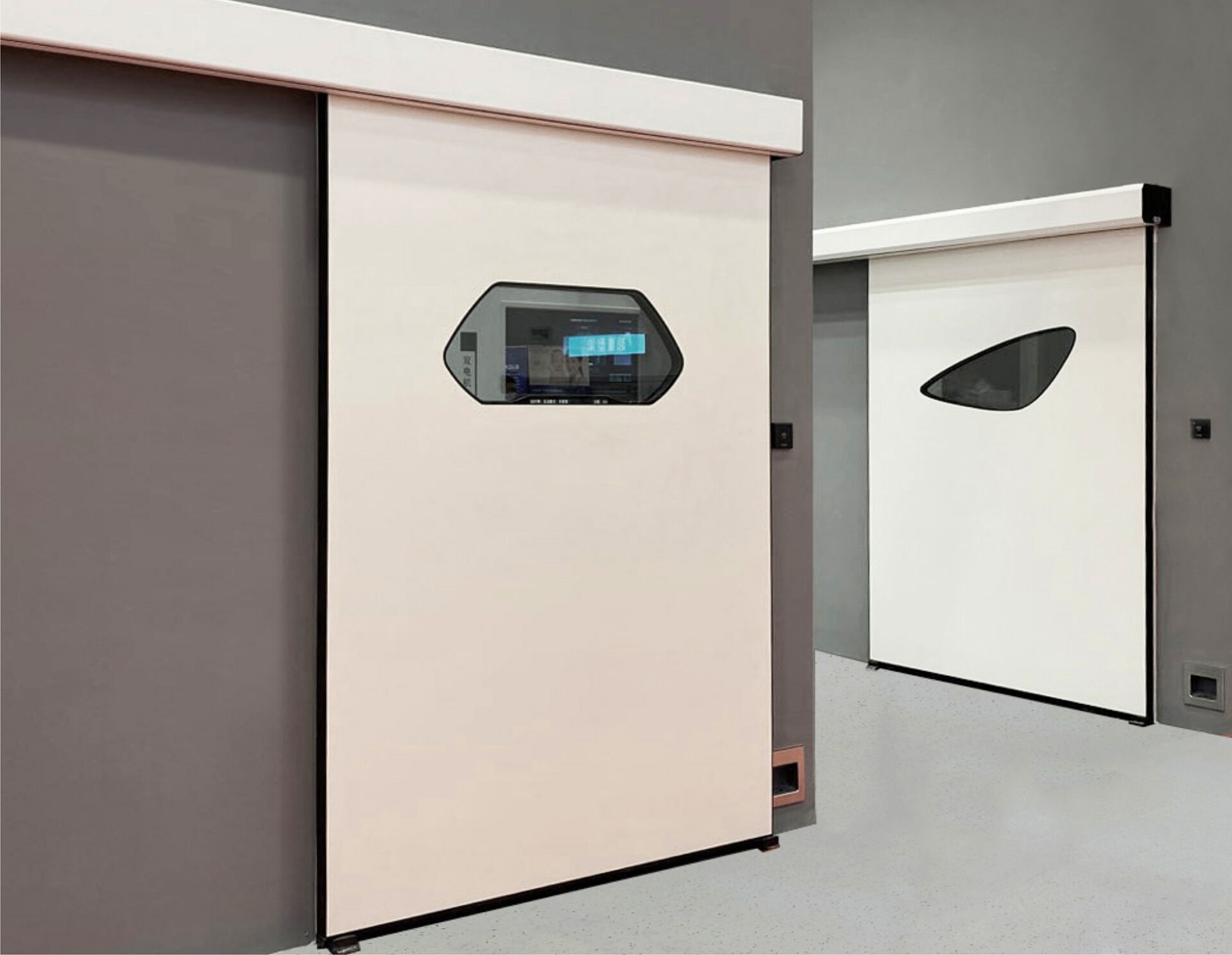
- Hermetic sliding or swing doors supporting pressure integrity and repeatable sealing
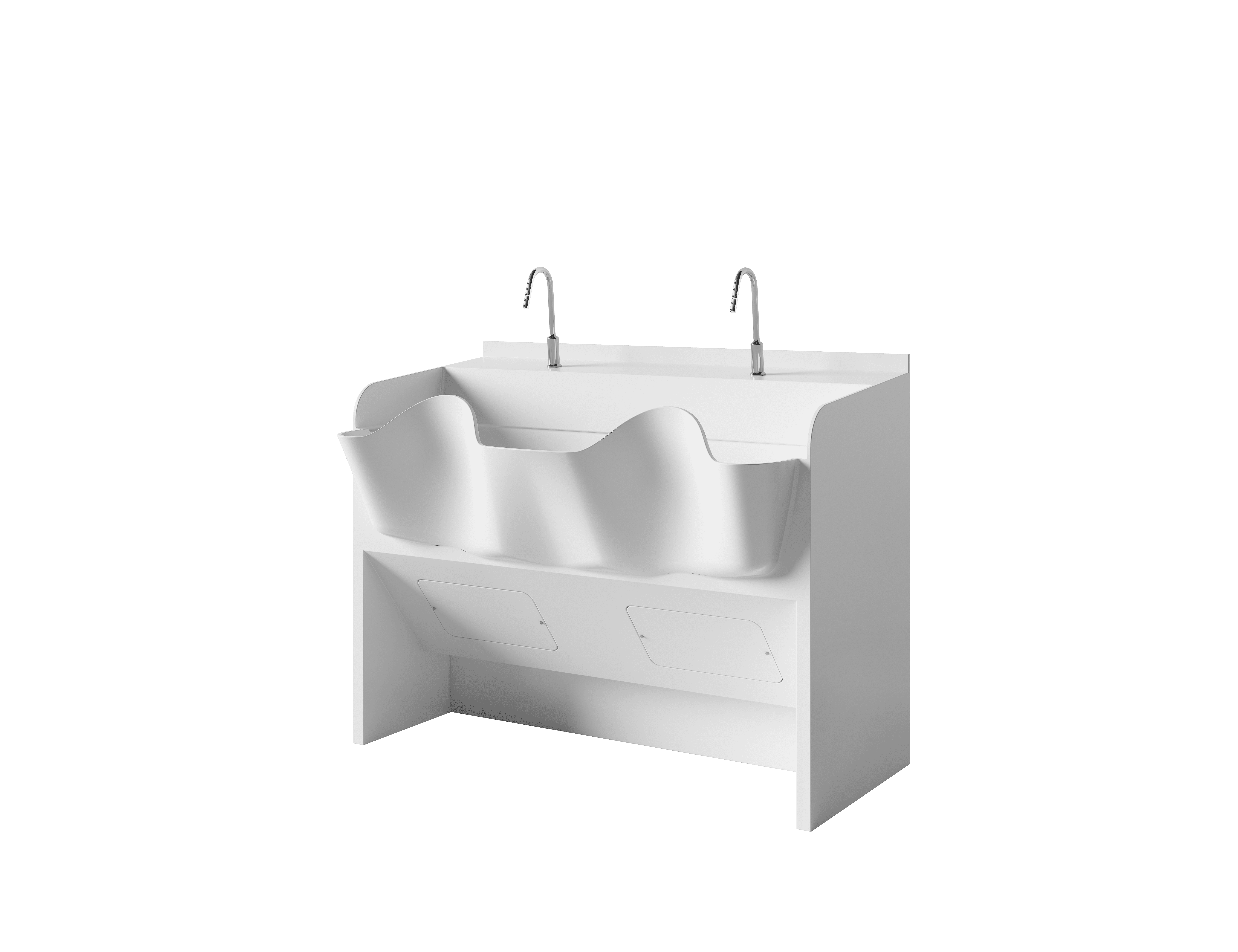
- Flush-mounted cabinets, X-ray viewers, control panels and writing surfaces
- Defined interfaces for MEP, medical gas, data and HVAC penetrations
Representative providers
- medifa — modular room systems integrating walls, doors and ceilings with surgical furniture into a coordinated environment. Part of Reinsberg Group.
- Operamed — prefabricated hospital architecture with emphasis on modular construction and hygiene-driven detailing.
- OPIKAR — modular operating room systems with integrated equipment and service interfaces.
- ALVO Medical — modular operating theater environments combined with OR furnishings and accessories. Part of Reinsberg Group — see section 9.
- Viessmann VITEC — operating room wall systems used in new-build and modular upgrade projects, with clean-air scope in some deliveries.
- SHD Italia — engineered operating and critical-care environments combining architectural elements with integrated services.
Usually outside this model
Architectural providers generally do not own digital OR workflow platforms or hospital IT logic, and airflow performance is often engineered by a specialist partner. The envelope and the airflow are physically inseparable in operation, so the coordination between these two models is the single most important interface in the project.
4. Solution Model: Airflow, UCV and Infection-Control Engineering
The performance layer. This model owns how air actually behaves in the room during surgery.
Airflow specialists engineer the supply pattern, air change rate, pressure cascade and filtration strategy. Their responsibility is measurable performance under load, not the physical envelope — although the envelope determines whether their design can be achieved.
Typical scope
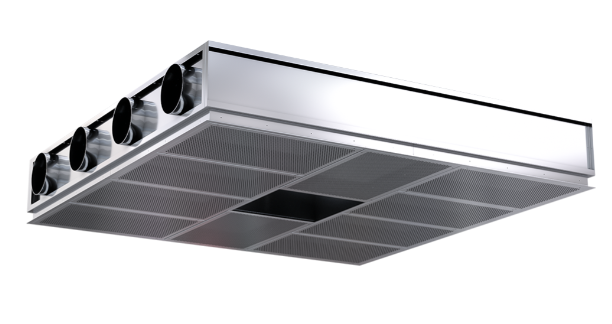
- Ultra-clean ventilation (UCV) and laminar airflow ceiling systems, including canopy sizing and terminal filter arrangement
- Air change rate calculation, supply and extract balance, and recirculation strategy
- Pressure cascade and zoning between theater, preparation, scrub, anaesthesia and corridor
- Filtration staging — typically pre-filter, secondary filter and terminal HEPA at the supply face
- Testing, balancing and performance validation support at handover
Standards that define the performance
Airflow claims are only meaningful against a named standard. The four most frequently specified frameworks differ substantially, and a proposal should state which one governs.
| Framework | Region of origin | What it governs in an operating theater |
|---|---|---|
| DIN 1946-4 | Germany | Defines room classes Ia and Ib. Class Ia requires a low-turbulence displacement flow ceiling covering a protective area of at least 3.2 m × 3.2 m for high-requirement surgery. |
| HTM 03-01 | United Kingdom | Specialised ventilation for healthcare premises. Distinguishes conventional theatres from UCV theatres and sets validation and annual verification requirements. |
| ANSI/ASHRAE/ASHE 170 | United States | Ventilation of health care facilities. Sets minimum total air changes per hour, minimum outdoor air, positive pressure relative to adjacent spaces, and temperature and humidity ranges for operating rooms. |
| ISO 14644-1 / -3 | International | Cleanroom air cleanliness classification and test methods. Frequently referenced for particle counting at rest and in operation, commonly ISO 5 under the canopy and ISO 7 in the periphery. |
| NFPA 99 / HTM 02-01 | US / UK | Medical gas and vacuum systems — terminal units, pipeline integrity and testing. Directly affects envelope penetration detailing. |
Representative providers
- Medexs — ultra-clean ventilation systems for healthcare environments.
- Howorth Air Technology — clean air technology for healthcare and controlled environments.
- TROX — air distribution components and terminal devices widely used in healthcare HVAC.
Airflow specialists rarely define wall, door and ceiling standards themselves. Where the envelope supplier and the airflow supplier are separate, the air handling unit capacity, the ceiling aperture dimensions and the room airtightness target must be agreed in writing before either design is released.
5. Solution Model: Digital OR and Workflow Integration
The clinical coordination layer — devices, data and video connected into a single control point.
Digital OR providers focus on how the surgical team interacts with equipment and information during a procedure. Their value is measured in workflow efficiency and data continuity rather than in physical construction.
Typical scope
- Centralised operating room control platforms and touch interfaces
- Audiovisual routing, recording and display management
- Integration of surgical devices, endoscopy stacks and imaging sources
- Connectivity with HIS, PACS and hospital IT infrastructure
- Workflow configuration and clinical training
Representative providers
- STERIS — operating room integration and infection-prevention ecosystems, with prefabricated wall solutions in selected OR environment projects.
- Getinge — integrated OR ecosystems combining software and surgical environment equipment; architectural envelopes are typically partner-supplied and coordinated within the clinical workflow design.
- Dräger — anaesthesia and monitoring device ecosystems, usually integrated into environments where architectural systems are delivered by separate providers.
Usually outside this model
Digital OR providers do not normally take primary responsibility for the modular wall system, the structural ceiling or hermetic doors as a coordinated architectural package. Where a digital integrator leads a tender, the envelope is typically subcontracted, and the buyer should confirm who carries envelope warranty and validation.
6. Solution Model: Cleanroom and Controlled-Environment Specialists
Visually similar to modular OR systems, but built from a different design intent.
Origin and design philosophy
These providers typically come from pharma, life science and high-technology cleanroom construction. Their engineering strength is contamination control and ISO-classified environmental performance, supported by mature prefabrication methods and fast installation cycles.
Typical scope
- Modular walls and ceilings for classified controlled environments
- Cleanroom-grade joints, gaskets, seals and non-shedding finishes
- Airflow coordination aligned with ISO 14644 cleanroom principles
- Prefabrication and rapid on-site assembly methods
Representative providers
- AES Clean Technology — modular cleanroom systems with healthcare and hybrid applications.
- MECART — modular cleanroom wall and ceiling systems adapted to medical environments.
- PortaFab — modular wall and ceiling systems for controlled environments including healthcare support spaces.
- Nicos Group — controlled-environment solutions spanning industrial and selected healthcare applications.
Cleanroom-derived systems fit well when:
- The space is a compounding pharmacy, sterile preparation or CSSD support zone
- ISO classification is the primary acceptance criterion
- Ceiling equipment loading is light or absent
- Isolation performance outweighs surgical ergonomics
Adaptation is required when:
- Heavy pendant and surgical light loads must be carried
- Hermetic doors must cycle hundreds of times per day
- Flush medical gas and IPS terminals are needed in the wall plane
- Hospital maintenance teams must service panels without specialist tooling
7. Solution Model: Turnkey Integrators and Volumetric Modular Units
Two delivery-led models: coordination of many suppliers, or a preassembled room delivered as a single unit.
7.1 Project integrators and turnkey hospital contractors
Integrators assemble complete operating theater projects by coordinating multiple specialist suppliers and providing single-point contractual responsibility for execution. Scope typically covers project management, procurement, installation supervision, commissioning and handover coordination.
Representative large-scale healthcare contractors include Turner Construction and the Shapoorji Pallonji Group. Theatre quality under this model depends on the systems selected and the discipline of interface coordination, not on the word turnkey.
7.2 Volumetric and craned-in modular operating theaters
This model delivers theatres as largely preassembled volumetric units, built off site and installed as one or a limited number of large modules. It prioritises deployment speed over long-term architectural flexibility, and is well suited to emergency capacity expansion, remote or infrastructure-limited locations, and temporary surgical capacity during renovation of a permanent suite.
Q-bital is a representative provider of craned-in and expandable modular healthcare facilities.
8. Solution Model: OEM Component Manufacturers
Component supply is a legitimate and valuable model. Confusion arises only when product modularity is presented as system delivery.
OEM manufacturers supply the individual elements of a modular operating theater — wall panels, hermetic doors, laminar airflow ceilings, air handling units, control panels and accessories. A large share of global modular OR content is manufactured under this model and delivered through system providers, integrators or regional contractors.
The model creates value when components are supplied inside a defined system framework with a named integration owner. It creates risk when a component catalogue is presented as a complete theatre and the buyer assumes integration, commissioning and validation are included.
Four questions that resolve any OEM claim
-
1Products or system?
Is the offer a bill of materials, or a coordinated package with defined interfaces between items?
-
2Who owns integration and installation?
Named party, contractually. Supervision-only support is a valid answer but must be stated.
-
3How are interfaces managed?
Specifically the ceiling-to-wall joint, the airflow ceiling aperture, gas and electrical penetrations, and door frame sealing.
-
4Who supports the room after handover?
Panel replacement availability, filter and gasket supply continuity, and response time for hermetic door service.
9. Ownership Consolidation: Why Two Bids May Come From One Owner
Several of the best-known European modular operating theater brands now sit under a single holding company. This changes how a competitive tender should be read.
Supplier lists in this market are usually treated as lists of independent companies. That assumption is increasingly out of date. A consolidation programme has been running across the European operating room sector, and the most active vehicle is Reinsberg Group, the healthcare technology holding of the Prague-based investment firm BHM Group.
The group was formed around three manufacturers — the German company medifa and the Polish companies ALVO Medical and FAMED Żywiec — and has expanded by acquisition since. It acquired a majority stake in the UK manufacturer Brandon Medical in October 2024, completed the acquisition of Rein Medical in February 2026, and added the Spanish manufacturer Tedisel Medical, headquartered in Badalona near Barcelona, in 2026.
Group composition and solution model coverage
| Company | Base | Primary contribution | Solution model |
|---|---|---|---|
| medifa | Germany | Operating tables and modular room systems | Architectural envelope |
| ALVO Medical | Poland | Hospital modular building systems, OR integration, medical furniture | Architectural envelope |
| FAMED Żywiec | Poland | Operating tables and hospital beds | Equipment |
| Brandon Medical | United Kingdom | Surgical lighting, audiovisual and digital control panels | Digital OR |
| Rein Medical | Germany | Digital hospital solutions, OR integration, video management | Digital OR |
| PROTEC | Germany | X-ray and imaging systems | Equipment |
| Tedisel Medical | Spain | Hospital infrastructure, operating rooms, intensive care | Architectural envelope |
Read across the right-hand column and the significance becomes clear. A single owner now covers the architectural envelope, digital OR integration and surgical equipment layers described earlier in this survey — three of the six solution models, through seven separately branded companies operating in at least five countries.
What consolidation improves, and what it does not
Advantages of a group-sourced theatre:
- Envelope, lighting, tables and video are pre-coordinated, reducing interface risk
- Single commercial counterparty across several layers
- Broader service footprint through group subsidiaries
- Greater financial depth behind long warranty periods
What still needs verifying:
- Whether airflow and UCV scope is in-house or subcontracted
- Whether component substitution is permitted after award
- Whether pricing remains competitive without an outside bidder
- Whether local installation is by group staff or an appointed agent
10. How to Evaluate a Modular Operating Theater Proposal
A responsibility matrix converts incomparable proposals into a like-for-like comparison in a single page.
The term modular operating theater functions as a label rather than a definition. The reliable method is to identify which solution model each bidder represents, then require every bidder to complete the same responsibility matrix.
| System layer | Ask the bidder | Common gap to expose |
|---|---|---|
| Architectural envelope | Who manufactures panels, ceiling and doors, and who warrants airtightness? | Panels supplied, sealing performance unassigned |
| Airflow and pressure | Which standard governs, and who guarantees the measured result? | Equipment supplied without a performance guarantee |
| Embedded services | Who coordinates gas, IPS, data and pendant support with the envelope? | Penetrations cut on site after fabrication |
| Digital and control | Who fixes device positions, and by which date in the programme? | Digital scope awarded after panel release |
| Validation | Who performs acceptance testing and issues the documentation? | Testing assumed to be the client's responsibility |
| Lifecycle | What is the spare-panel and gasket availability period? | No commitment beyond the warranty period |
Four principles for comparison
- Start with role, not brand. Establish who builds the envelope, who owns airflow performance and who owns digital workflow before reading any price.
- Separate products from systems. A modular component does not create a modular system outcome on its own.
- Name the standard. DIN 1946-4 Class Ia, HTM 03-01 UCV and an ASHRAE 170 minimum are three different rooms at three different costs.
- Expect hybrid delivery. Most successful projects combine several models. That is not a problem, provided every interface has a named owner.
Market map by region and primary model
Providers are grouped by headquarters and by the solution model they most commonly occupy. Actual scope varies by project, region and partner ecosystem.
Germany
- medifa — architectural systems (Reinsberg Group)
- Dräger — device ecosystem and digital OR
- Viessmann VITEC — OR wall systems and clean air
- TROX — airflow components
- NEXOR Medical — integrated medical environments
- HT Group — integrated modular OR solutions
Italy
- SHD Italia — architectural systems
- Operamed — prefabricated hospital architecture
- Nicos Group — controlled environments
- Casaluci Healthcare — project and system integration
United Kingdom
- Medexs — ultra-clean ventilation
- Howorth Air Technology — clean air systems
- Q-bital — volumetric and craned-in units
United States and Canada
- STERIS — digital OR and infection prevention
- AES Clean Technology — cleanroom systems
- PortaFab — modular wall and ceiling systems
- Turner Construction — turnkey integration
- MECART (Canada) — cleanroom systems
Rest of Europe
- ALVO Medical (Poland) — architectural systems (Reinsberg Group)
- FAMED Żywiec (Poland), Tedisel Medical (Spain), Brandon Medical (UK), Rein Medical and PROTEC (Germany) — Reinsberg Group companies
- OPIKAR (Slovenia) — architectural systems
- Getinge (Sweden) — digital OR platforms
Asia and Middle East
- Shapoorji Pallonji Group (India) — turnkey integration
- Regional OEM manufacturing base — wall systems, hermetic doors, laminar airflow ceilings and compact AHUs supplied to system providers and contractors worldwide
This list is representative and not exhaustive. Company scope and project roles vary by region and partner ecosystem, and should be verified directly for any live tender.
Modular Operating Room Design: Envelope, Airflow and Interface Planning
A design-level companion to this survey, covering panel systems, ceiling load paths, hermetic door selection and the coordination sequence between envelope and airflow scope.
Frequently Asked Questions
A modular operating theater is an operating room built from prefabricated, factory-manufactured systems rather than conventional wet construction, allowing faster installation, cleaner service integration and easier lifecycle upgrades. In practice the term is applied to architectural envelope systems, airflow packages, digital OR integration, turnkey delivery and component supply. It should therefore always be defined by scope in a tender document, never by the label alone.
Because the term is a market label rather than a technical definition. Six distinct solution models compete under it: architectural envelope systems, airflow and ultra-clean ventilation engineering, digital OR integration, cleanroom-derived controlled environments, turnkey and volumetric delivery, and OEM component supply. Comparing proposals requires identifying which model each supplier represents before comparing price.
The most frequently specified are DIN 1946-4 in German-influenced markets, HTM 03-01 in the United Kingdom and markets following British practice, ANSI/ASHRAE/ASHE 170 in the United States, and ISO 14644-1 and -3 internationally for cleanliness classification and test methods. Medical gas scope is governed separately by NFPA 99 or HTM 02-01. A tender should name one governing framework, because the resulting rooms differ in specification and cost.
The difference is design intent. Modular operating room systems are engineered for surgical workflow and hospital serviceability first, with hygienic detailing, heavy ceiling load capacity and high-cycle hermetic doors. Cleanroom systems originate in pharmaceutical and industrial controlled environments where environmental classification is the primary objective. Cleanroom systems can be used in healthcare but usually require adaptation for equipment loading, clinical ergonomics and hospital maintenance practice.
Usually not. Digital OR providers focus on clinical coordination, device and data connectivity, video routing and control interfaces. The physical envelope of modular walls, ceilings and hermetic doors is typically delivered by a separate architectural system provider and coordinated during design. Where a digital integrator leads a tender, the buyer should confirm which party carries envelope warranty and validation responsibility.
Airflow specialists are essential to operating theater performance, but their scope is the performance layer: supply pattern, air change rate, pressure cascade, filtration and validation support. They do not usually define the architectural envelope. They are best evaluated as one specialist solution model within a broader modular operating theater system, with the envelope airtightness target agreed jointly with the panel supplier.
OEM manufacturers supply panels, hermetic doors, laminar airflow ceilings, air handling units and control panels, and account for a large share of global modular OR content. Product modularity does not by itself create a modular operating theater system. OEM value is highest when components are supplied within a defined system framework where a named party owns interfaces, installation supervision and validation.
No. Containerized or craned-in theatres are volumetric units built off site and installed whole, designed for rapid deployment with minimal site work. Their internal dimensions are limited by road transport and crane constraints. Modular operating room architectural systems are installed inside a permanent building and optimised for long-term adaptability and equipment upgrades. The two models serve different objectives and should be evaluated against different criteria.
Reinsberg Group, the healthcare technology holding of the Prague-based investment firm BHM Group, brings together medifa, ALVO Medical, FAMED Zywiec, Brandon Medical, PROTEC, Rein Medical and Tedisel Medical. The group was formed around medifa, ALVO Medical and FAMED Zywiec, acquired a majority stake in Brandon Medical in October 2024, completed the acquisition of Rein Medical in February 2026, and added Tedisel Medical in 2026. Buyers should note that proposals from two of these brands are not independent bids, and should ask every bidder to disclose its ultimate parent company.
Require every bidder to state, for each of the five system layers, whether they own it, coordinate it or exclude it. The five layers are architectural envelope, airflow and pressure, embedded services, digital and control, and validation and lifecycle. Then confirm the governing ventilation standard, the party responsible for acceptance testing, and the spare-part availability period. This converts incomparable proposals into a like-for-like comparison.
ICARELIFE Technical Team
Healthcare infrastructure specialists with extensive experience in modular operating theaters, medical cleanrooms and MEP system integration, supporting contractors and hospital projects across Southeast Asia, Europe, the Middle East and South America. ICARELIFE — Innovating Spaces That Heal.
Related Solutions from ICARELIFE
Technical references covering the envelope and airflow layers described in this survey.
ICARELIFE — Modular Operating Theaters
Define the scope before you compare the price
ICARELIFE supplies the architectural envelope and airflow layers of modular operating theaters — wall systems, hermetic doors, laminar airflow ceilings, compact air handling units and OR control panels — to contractors, system providers and hospital projects worldwide. Scope, interfaces and validation responsibility are defined in writing before drawings are released.