UPS Systems for Modular Operating Rooms and Hospital Cleanrooms
Power interruption in a surgical environment is not a technical issue — it is a patient safety event. This guide covers how an integrated UPS solution protects your OR and cleanroom investment from the moment the grid fails.
- Operating rooms and cleanrooms require zero-transfer-time UPS — standard backup power is not sufficient
- A correctly sized 3-phase online UPS protects surgical lighting, HVAC, monitoring, and life-critical equipment simultaneously
- UPS must be specified as part of the overall MEP package, not procured separately after fitout
- ICARELIFE supplies UPS pre-integrated with modular OR and cleanroom solutions, reducing coordination risk for contractors
Why Operating Rooms and Cleanrooms Require Dedicated UPS
Most electrical systems are designed to tolerate brief interruptions. A surgical environment cannot. The consequences of even a 20-millisecond power gap during an active procedure can be irreversible.
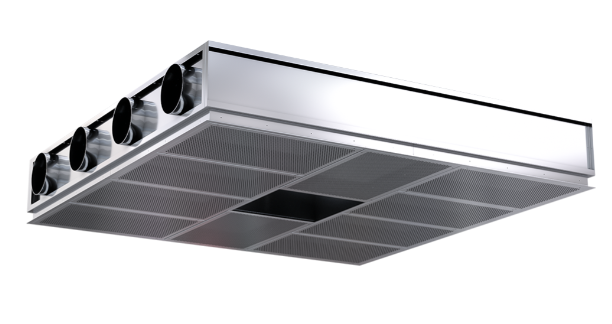
An operating room draws power from multiple critical subsystems simultaneously: the laminar flow ceiling (HEPA filtration and pressurisation), surgical pendant arms, anaesthesia workstations, integrated display systems, and surgical lighting. A pharmaceutical cleanroom adds environmental control and monitoring equipment to this load profile. All of these must remain online without interruption — even when the building's main supply fluctuates, fails, or switches to generator.
Standard backup generators introduce a transfer gap of 10–30 seconds. That gap is unacceptable in an active surgical environment. A true online UPS with zero-transfer-time architecture eliminates this gap entirely, providing continuous, regulated output regardless of input conditions.
Zero Transfer Time
True double-conversion topology maintains output continuously — no gap between mains failure and battery support.
Clean Sine Wave Output
THD ≤ 2% protects sensitive surgical and monitoring equipment from voltage distortion and harmonic interference.
Protects All OR Subsystems
Single UPS covers laminar ceiling, HVAC, surgical lighting, pendants, and monitoring — not just selected circuits.
Generator Compatible
Wide input voltage range (190–520 VAC) bridges the gap between mains failure and generator takeover seamlessly.
Risks of Inadequate Power Protection in Surgical Environments
Contractors and consultants who specify standard commercial UPS for medical applications often underestimate what is at stake — for the project, and for the end user.
- Patient safety: Power interruption during active surgery can compromise monitoring, ventilation, and surgical lighting simultaneously
- Equipment damage: Voltage spikes and harmonic distortion degrade sensitive electronic systems over time, increasing long-term maintenance cost
- HVAC disruption: Cleanroom and OR pressurisation depends on continuous fan operation — any interruption breaks the sterile barrier
- Regulatory non-compliance: Facilities lacking certified power protection may fail inspection or accreditation review
- Contractor liability: If power-related incidents occur post-handover and UPS is found under-specified, the installing contractor carries exposure
How UPS Integrates Into a Modular OR or Cleanroom System
In an integrated ICARELIFE solution, the UPS is not a standalone item on the BOQ. It is a defined subsystem within the overall power and infrastructure package.
The typical power protection architecture for a modular operating room suite includes the following layers:
- Main building supply — incoming 3-phase 400 VAC from the hospital grid
- Online UPS (3P/3P) — constant double-conversion; feeds all OR and cleanroom circuits with regulated, clean output
- Generator interface — UPS bridges the transfer gap; once generator stabilises, UPS recharges from generator output
- Distribution panel — UPS output feeds dedicated circuits for laminar ceiling, pendants, lighting, HVAC, and monitoring
- SNMP monitoring — UPS status integrated into the facility BMS or OR control panel display
Modular Operating Room Systems
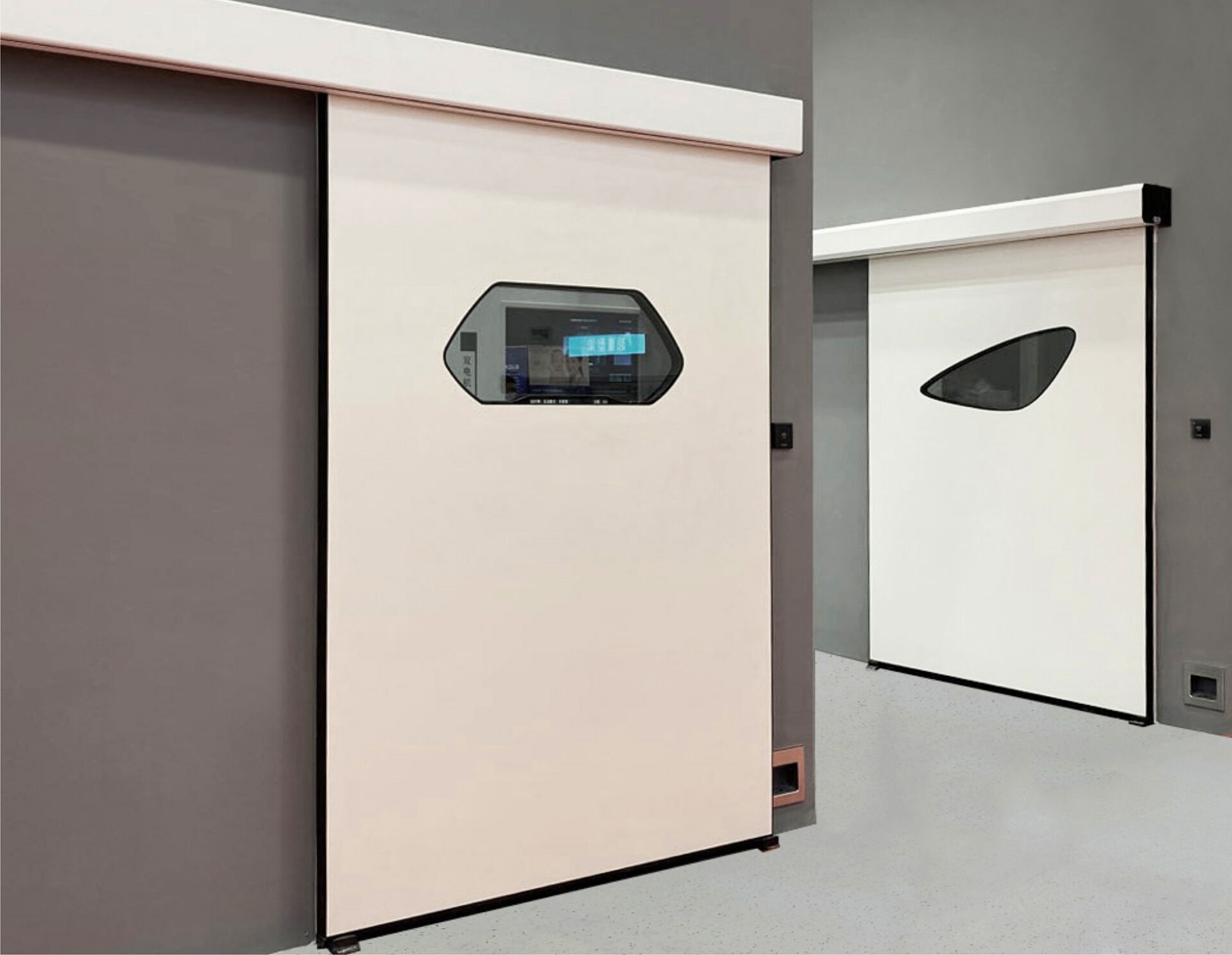
Fully integrated OR suites supplied as a coordinated package — wall systems, laminar ceiling, surgical pendants, hermetic doors, and power infrastructure.
Sizing and Selection Guide
UPS capacity must be calculated against the actual connected load of the OR or cleanroom — not estimated from room area or bed count.
Typical Load Profiles by Application
| Application | Typical Load Range | Recommended UPS Model | Notes |
|---|---|---|---|
| Single Standard OR Suite | 20–35 KVA | Galleon II 30KL / 40KL | Covers laminar ceiling, pendant, lighting, monitoring |
| Hybrid OR / Imaging OR | 40–70 KVA | Galleon II 60KL / 80KL | Additional load from C-arm, intraoperative imaging systems |
| OR Suite + ICU Block | 80–120 KVA | Galleon II 100KL / 120KL | Centralised UPS for multi-room critical care block |
| Pharmaceutical Cleanroom (ISO 7/8) | 30–60 KVA | Galleon II 40KL / 60KL | FFU arrays, HVAC, EMS monitoring, access control |
| Large Hospital Floor (Multi-OR) | 120–200 KVA | Galleon II 160KL / 200KL | Parallel configuration up to 3 units for N+1 redundancy |
- One operating theatre
- ISO 7 or ISO 8 cleanroom
- Standard laminar ceiling + pendants
- Load: 20–60 KVA
- Select: 30KL – 60KL
- Hybrid OR or multiple OR suites
- ISO 5/6 pharmaceutical cleanroom
- Centralised critical power block
- Load: 80–200 KVA
- Select: 80KL – 200KL (parallel)
Technical Specifications — Galleon II 3P/3P Online UPS
Capacity range: 30KVA to 200KVA. True double-conversion, 3-phase input / 3-phase output. Output power factor 1.0.
| Parameter | Specification |
|---|---|
| Topology | True double-conversion (online) |
| Capacity Range | 30KVA / 30KW — 200KVA / 200KW |
| Phase Configuration | 3-phase in / 3-phase out (3Ph+N) |
| Nominal Input Voltage | 3 × 400 VAC |
| Input Voltage Range | 190–520 VAC @ 50% load; 305–478 VAC @ 100% load |
| Input Power Factor | ≥ 0.99 @ 100% load (active PFC, all phases) |
| Output Voltage | 380 / 400 / 415 VAC selectable (3Ph+N) |
| Output Power Factor | 1.0 |
| Transfer Time (AC to Battery) | Zero (true online) |
| Output Waveform | Pure sine wave |
| THD (Linear Load) | ≤ 2% |
| THD (Non-linear Load) | ≤ 5% |
| Efficiency — AC Mode | 95.0% |
| Efficiency — ECO Mode | 98.0% |
| Parallel Capacity | Up to 3 units (redundancy / capacity expansion) |
| Frequency Range | 46–54 Hz / 56–64 Hz (auto-sensing) |
| Generator Compatible | Yes |
| Emergency Power Off (EPO) | Yes |
| Maintenance Bypass | Included |
| Communication | RS-232, USB, optional SNMP |
| Display | LCD (optional 7" touch panel) |
| Operating Temperature | 0–40°C |
| Noise Level | < 75 dB @ 1 metre |
Compliance Considerations for Hospital Projects
Hospital consultants and accreditation bodies increasingly scrutinise the power protection specification as part of the facility commissioning process.
For medical facilities, the relevant frameworks typically include:
- IEC 60364-7-710 — Electrical installations of buildings: requirements for medical locations, including classification of Group 1 and Group 2 circuits and the requirement for IT medical systems in Group 2 areas
- HTM 06-01 (UK / international reference) — NHS Health Technical Memorandum covering electrical services for healthcare facilities, referenced by consultants in multiple markets
- NFPA 99 (US-influenced markets) — Health Care Facilities Code; relevant in Southeast Asian projects with US-trained engineering consultants
- Local building codes — Indonesia (SNI), Philippines (PEC), Thailand (EIT), Germany (VDE), Poland (PKN)
What Contractors Should Submit with Tender Documentation
- 1UPS datasheet with confirmed capacity in KVA and KW (power factor 1.0 required for medical loads)
- 2Load calculation schedule showing total connected load vs UPS rated capacity
- 3Confirmation of zero transfer time (double-conversion topology statement)
- 4Battery autonomy calculation at 100% load and 50% load
- 5Generator compatibility confirmation and transfer sequence description
- 6SNMP or BMS integration capability documentation
- 7Maintenance bypass confirmation (essential for continuous operation during servicing)
Frequently Asked Questions
An online (double-conversion) UPS continuously converts incoming AC to DC and back to AC, so the output is always generated from the inverter — not from the mains. This means there is zero transfer time when mains power fails. An offline UPS only activates the inverter after detecting a failure, introducing a transfer delay of 4–20 milliseconds. For medical applications with Group 2 circuits, the IEC 60364-7-710 requirement for interruption not exceeding 0.5 seconds means only true online UPS is suitable.
Calculate the sum of all connected loads in KVA: laminar flow ceiling (typically 5–15 KVA depending on size), surgical pendants and equipment (10–20 KVA), surgical lighting (2–5 KVA), anaesthesia and monitoring (3–8 KVA), and HVAC supply fan (3–10 KVA). Add 20% margin for safety and future capacity. For a standard single OR suite, a 30–40 KVA unit is typically sufficient. For hybrid ORs or multi-room blocks, consult ICARELIFE for a load schedule review.
Yes, provided the UPS is sized to cover the combined load of both areas. In many hospital projects, a centralised UPS for the OR suite also protects the adjacent sterile supply corridor, cleanroom preparation area, and associated HVAC. This reduces capital cost and simplifies maintenance. The Galleon II range supports parallel operation up to 3 units, allowing N+1 redundancy configurations for larger facilities.
ICARELIFE supplies UPS both as a standalone item and as part of an integrated modular OR or cleanroom solution. When specified as part of a full package, load calculations, cable sizing, and distribution coordination are included in the scope — reducing coordination effort for the contractor. For standalone inquiries, we provide technical documentation suitable for tender submission.
The Galleon II is a long-run model — battery autonomy depends on the external battery bank capacity, which is configurable (up to 32 batteries, adjustable). Standard configurations provide 10–30 minutes at full load, which is sufficient to bridge mains-to-generator transfer and sustain operations during a brief outage. For projects requiring longer autonomy (e.g., 60–120 minutes), battery bank sizing can be specified accordingly.
Yes. The Galleon II includes RS-232, USB, and optional SNMP card. SNMP integration enables monitoring via standard network management platforms and web browsers, and can be connected to hospital BMS for centralised alarm and status reporting. For OR projects with integrated control panels, UPS status can be displayed alongside HVAC and lighting system data.
Specify Power Protection as Part of Your OR Package
Submit your project details and we will provide a UPS load calculation, model recommendation, and coordinated specification ready for tender submission.