ICARELIFE — Technical Guide
Sliding Door Opening Direction: How to Specify It Correctly
For contractors and consultants ordering hermetic sliding doors, this guide explains how opening direction is defined, why the reference viewpoint matters, and how to confirm it correctly before production begins.
Quick Answer
- Sliding door opening direction only means something when tied to one fixed viewpoint — it is never symmetrical.
- ICARELIFE confirms direction as viewed from the corridor side, facing the door before entry.
- State direction as "left to right" or "right to left" from that fixed reference — not from inside the room.
- Confirming this before production avoids reversed track installation, wall clashes, and costly rework.
What "Opening Direction" Means for a Sliding Door
Sliding door opening direction is a fixed hardware property, not a description — get it wrong and it cannot be corrected on site.

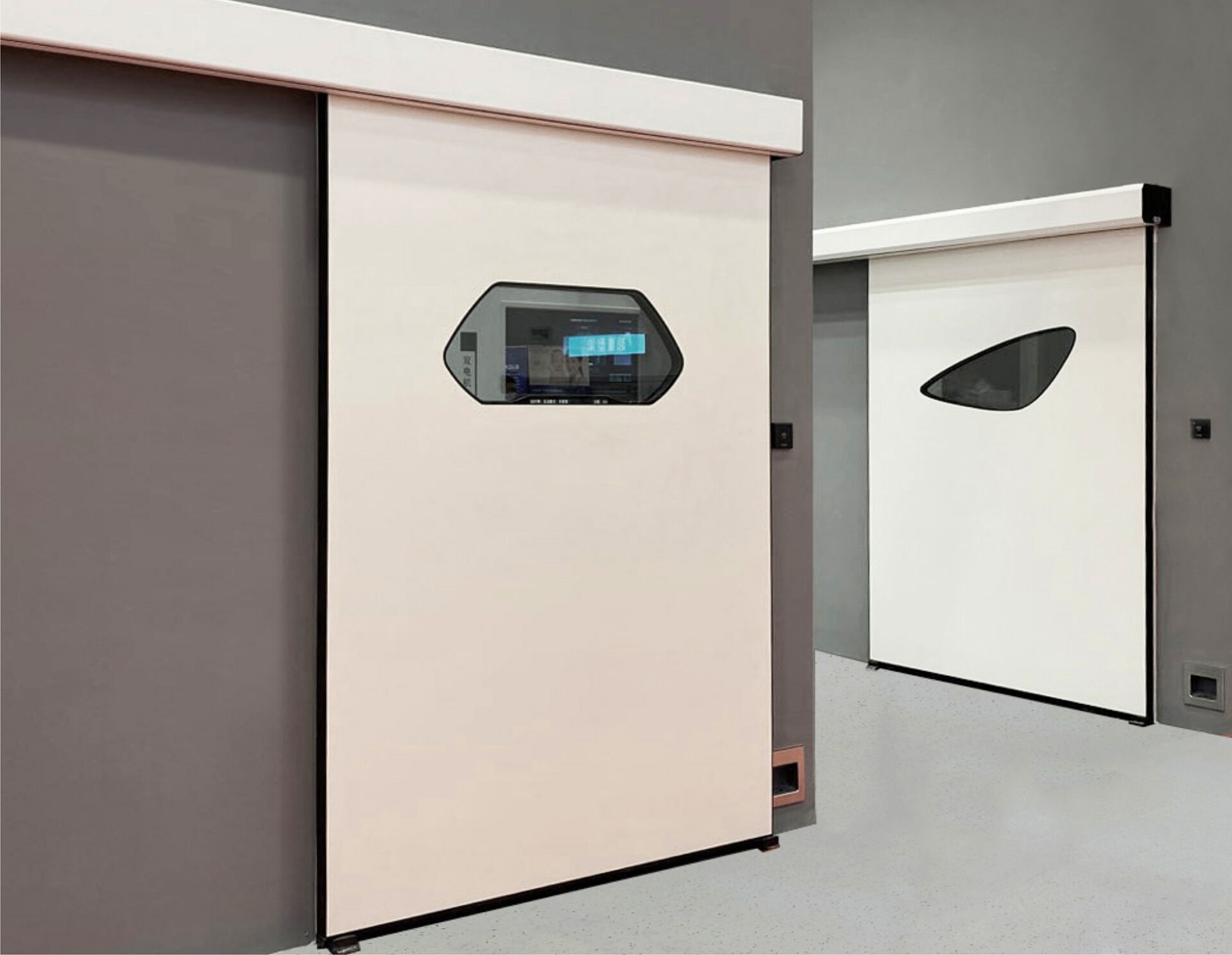
Sliding door opening direction is described from one fixed viewpoint — right to left (A) or left to right (B).
A hinged door is classified by "handing" — left-hand or right-hand, based on which side the hinges sit. A sliding door works differently. The panel does not swing; it travels along a track fixed above the frame, and it can only move toward one side — left or right. There is no neutral or reversible middle ground once the track, motor, and hermetic seal are built.
This applies equally to hermetic sliding doors for operating rooms, ICU and isolation ward doors, and general cleanroom automatic doors. Because the track, drive motor, guide rail, and compression seal are all built to match one confirmed direction, opening direction has to be decided at the specification stage — before the door leaf goes into production — not adjusted after the door arrives on site.
The Reference Viewpoint Every Order Must Confirm
The words "left to right" describe nothing on their own. They only become meaningful once everyone agrees on where the viewer is standing. This is the single most common source of confusion in sliding door orders, and it is entirely avoidable.
| Reference Viewpoint | Stated Direction | Physical Result |
|---|---|---|
| Facing the door from the corridor side (ICARELIFE default) | Left to Right | Panel travels toward the wall on the corridor's right-hand side |
| Facing the door from inside the room | Left to Right | Panel travels toward the opposite physical wall — the mirror image of the row above |
Both rows describe a door as "left to right." Only one of them matches what a given project actually needs. This is why direction can never be confirmed by words alone — it has to be tied to a stated, fixed viewpoint.
Why the Wrong Direction Creates Real Project Risk
On a hermetic door, opening direction is not cosmetic. It determines which wall the panel travels toward, and several other build decisions follow directly from it.
Common consequences of an unconfirmed direction
- The panel opens directly into a fixed medical gas outlet, control panel, or equipment column mounted on the wall it slides toward.
- Motor position, sensor placement, and the compression seal mechanism are built specific to one handing on most hermetic models — reversal after fabrication usually means a new door leaf and track, not a site adjustment.
- On an export order, a wrong-handed door discovered during installation means a second production run and a second freight cycle — weeks of schedule loss on an international project.
- Clearance for adjacent doors, corridors, or scrub stations may only work in one direction — the wrong handing can block circulation space the project depends on.
These are not hypothetical risks. For contractors sourcing hermetic doors from an overseas factory, a reversed direction caught after shipment is one of the most expensive and time-consuming corrections possible — the door has to be rebuilt and shipped again, on top of the original lead time already spent.
Specification Checklist Before You Place the Order
Confirming direction takes minutes at the drawing stage. Correcting it after production does not. Use this checklist before the purchase order is issued.
-
State the reference viewpoint explicitly
Write "facing the door from the corridor side" (or the agreed alternative) on the order — not just "left" or "right."
-
Mark the direction with an arrow on the layout drawing
A drawn arrow removes any ambiguity that words alone can create.
-
Cross-check against adjacent wall-mounted equipment
Confirm the panel will not travel toward a gas outlet, control panel, or socket fixed to that wall.
-
Confirm handle, sensor, and control panel side
These components should match the confirmed direction, not be assumed by the factory.
-
Get written confirmation before production drawings are released
A signed-off drawing showing the confirmed direction should exist before the factory begins fabrication.
Frequently Asked Questions
Stand at the fixed reference point agreed for the project — usually facing the door from the corridor side — and note which way the panel slides from that position. What matters most is that everyone on the project uses the same viewpoint before the direction is written down, since the same words can describe two opposite doors depending on where the viewer stands.
This is one of the most common causes of factory rework on international door orders. Without a stated viewpoint, "left to right" can describe two physically opposite doors. Confirm the viewpoint in writing, and mark it with an arrow on the layout drawing, before the factory begins production.
In most cases, no — not without replacing the door leaf and track. Motor position, sensor placement, and the compression seal mechanism on airtight hermetic doors are typically built specific to one handing. Reversing direction after delivery generally requires a new production run rather than a site adjustment.
Yes. Direction determines which wall the panel slides toward, which affects the placement of medical gas outlets, control panels, sockets, and other fixed equipment near the door opening. It should be confirmed at the same stage as the final MEP layout — not left until installation.
ICARELIFE — Hermetic Doors
Confirm Your Door Specification Before Production
ICARELIFE reviews opening direction, sizing, and hardware specification against your project layout before production drawings are released — a standard step for every hermetic sliding door order, reducing the risk of reversed handing and rework on international shipments.