ICARELIFE — Cost & Timeline Comparison
Modular Operating Theater Cost vs Traditional Construction
An evidence-based comparison of construction time, cost drivers, and long-term flexibility for hospital contractors and project planners weighing the two approaches.
Quick Answer
- Modular operating theater construction is documented at 20–50% faster than traditional builds, per McKinsey & Company research.
- Cost savings of up to 20% are commonly cited, but logistics-heavy projects can see costs rise instead — the outcome depends on site and shipping conditions.
- Demountable modular panels allow later reconfiguration with far less demolition than a conventional room.
- A credible cost figure requires a project-specific bill of quantities, not a generic rate.
What independent research shows about construction time
Timeline is the most consistently documented advantage of modular operating theater construction, with independent sources converging on a similar range.
McKinsey & Company's 2019 report Modular Construction: From Projects to Products (Bertram et al.) found that while early modular projects had a mixed track record on cost, more recent projects have consistently been completed 20–50% faster than traditional on-site builds. Health Facilities Management, a publication of the American Society for Health Care Engineering, separately reports that construction managers estimate pre-building rooms or systems in a factory setting takes a third to half the time of conventional on-site construction.
| Workflow stage | Modular (parallel) | Traditional (sequential) |
|---|---|---|
| Factory production | Wall panels, ceiling modules, and doors manufactured off-site | No off-site manufacturing — everything built on site |
| Site preparation | Happens at the same time as factory production | Structural and finish work waits for the prior trade to complete |
| Trade sequencing | Coordinated assembly against a fixed delivery schedule | Framing, then services, then finishing, in sequence |
| Weather/site exposure | Limited — most work happens under factory conditions | Full exposure to weather and site access for the whole build |
Dodge Data & Analytics' Prefabrication and Modular Construction 2020 report found that GCs and construction managers forecast permanent modular construction in healthcare facilities will reach 41% of relevant projects over the next three years, up from 22% historically — the strongest forecast increase of any building type they tracked for that group.
What independent research shows about cost
Cost data is less consistent across sources than timeline data, and the honest picture includes a real counter-case.
Multiple industry analyses cite cost savings of up to 20% for modular construction, driven by factory quality control, bulk material purchasing, and reduced on-site labor and rework. McKinsey's own 2019 research notes that early modular projects had a mixed track record on cost specifically — savings became more consistent as the projects it studied matured.
Published market-size estimates for the modular operating room segment specifically vary enormously by research firm and market definition — from roughly $340 million to over $5 billion depending on the source — so this page does not cite a single market-size figure as fact.
Most cost confusion is scope confusion
A large part of why cost comparisons are hard to pin down is that "modular operating theater" quotations don't all cover the same scope. Before comparing any two numbers, confirm what's actually included:
| Typically included in the room package | Usually quoted separately |
|---|---|
| Wall panels and ceiling modules | Air handling unit (AHU) sizing and supply |
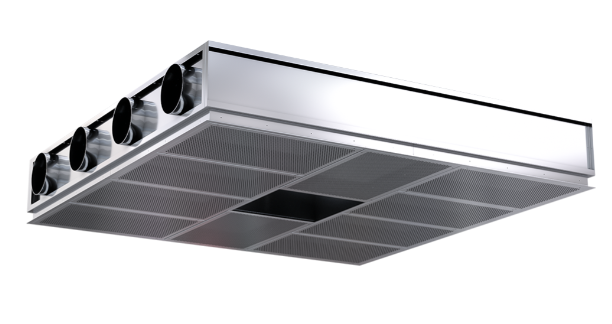
| Laminar airflow ceiling module | Medical gas system and outlets |
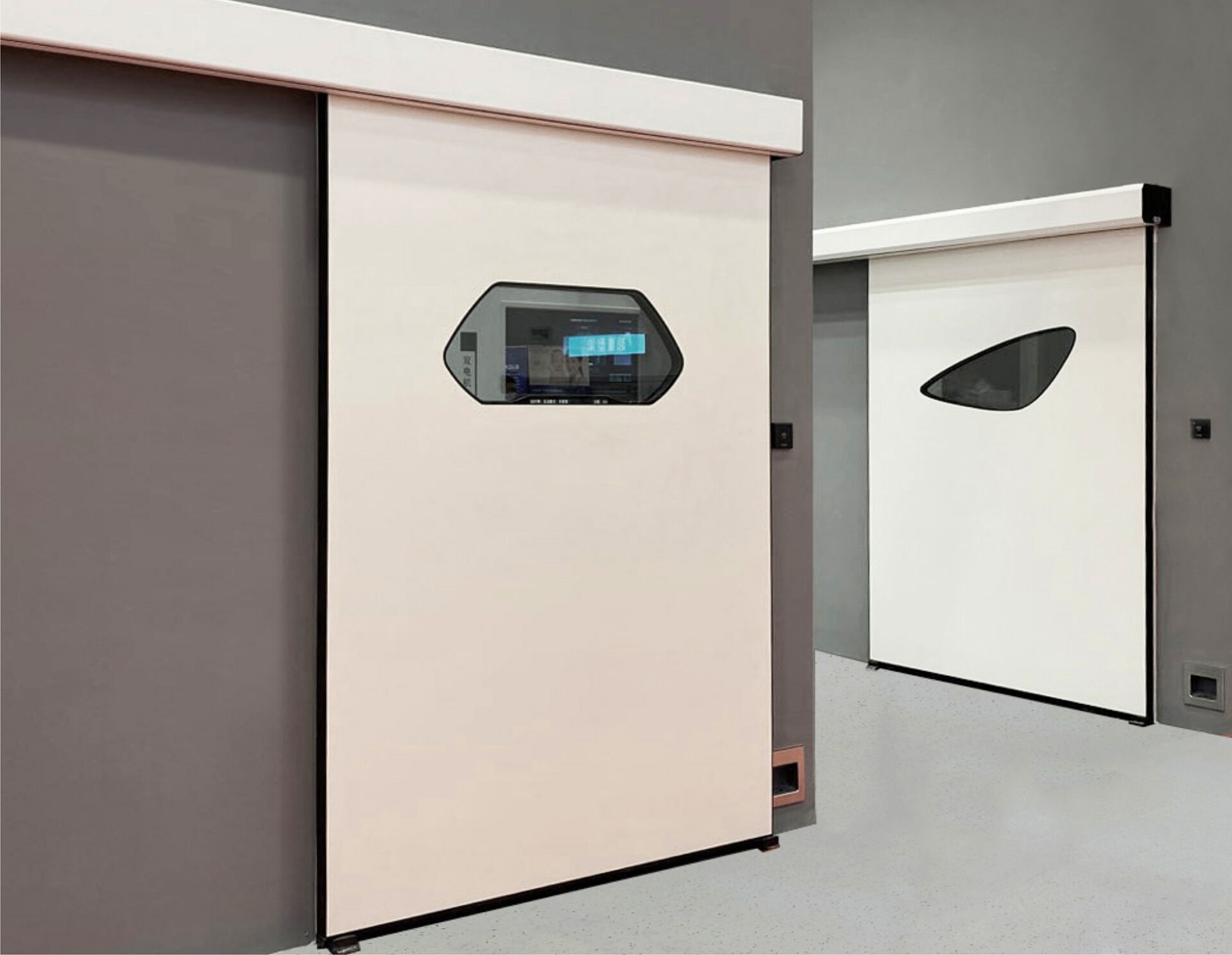
| Hermetic doors | Broader MEP works and utility tie-ins |
| OR control panel | On-site installation labor |
| Freight and logistics |
A quotation that looks cheaper may simply be quoting a narrower scope. Always compare like-for-like scope before comparing price.
Operational and maintenance comparison
Beyond construction, the two approaches differ in how the room performs over its working life.
| Factor | Modular OR | Traditional build |
|---|---|---|
| Surface hygiene | Seamless, factory-sealed panel joints and hermetic doors — fewer joints where bioburden can accumulate | Site-finished joints and plastered surfaces are more variable and workmanship-dependent |
| Component replacement | Standardized panels, doors, and filters can be swapped without demolition | Repairs often require breaking into finished surfaces |
| Reconfiguration | Demountable panel systems allow layout changes with limited demolition | Renovation typically means demolition and rebuild |
| Repair downtime | Components are designed for individual replacement, generally reducing the scope of any single repair | Fixed installations can require wider disruption to isolate a fault |
These are structural, design-level differences rather than percentage claims. No credible, sourced figure for "cleaning time reduction" or "annual maintenance cost" was found to hold up consistently across projects, so none is cited here.
How to choose between the two
The research points to a fairly simple decision framework.
Modular fits well if:
- Timeline pressure is high — urgent capacity, phased opening, or a tender deadline
- The room needs to adapt over time — multi-phase expansion or future reconfiguration
- Consistent factory quality control matters more than bespoke architectural detail
Traditional fits well if:
- The site is remote or logistics for factory-finished components are difficult
- The layout is highly bespoke and unlike anything else in the facility
- Local labor and materials are significantly cheaper than shipped components
Frequently Asked Questions
No. Industry research cites cost savings of up to 20% on typical projects, but shipping and logistics costs for factory-finished components can push total costs higher on remote or logistically difficult sites, sometimes by as much as 10%. The comparison depends on project location and scope.
McKinsey & Company research cites schedule reductions of 20 to 50% compared to conventional stick-built construction, and Health Facilities Management reports construction managers estimate a third to half the time versus on-site building.
Modular components are factory-finished and shipped to site, so international freight, import duties, and remote-site logistics add cost that a locally sourced traditional build doesn't carry. On projects with difficult logistics, this can offset some or all of the labor savings.
No. Cost depends on room size, cleanliness class, panel and door specification, AHU capacity, and shipping terms. ICARELIFE provides line-item quotations based on actual project scope rather than a generic rate.
Sources
- McKinsey & Company — Bertram, N. et al. (2019), Modular Construction: From Projects to Products. Schedule and cost findings cited directly from this report
- Health Facilities Management (American Society for Health Care Engineering) — Hospitals solve building challenges with modular construction
- Dodge Data & Analytics — Prefabrication and Modular Construction 2020 SmartMarket Report, healthcare and permanent modular construction forecast data
ICARELIFE Technical Team
Healthcare infrastructure specialists with experience in modular operating theaters, medical cleanrooms, and MEP system integration. ICARELIFE — Innovating Spaces That Heal.
Related Solutions from ICARELIFE
For the full system view or a project-specific quotation, start here:
ICARELIFE — Get a Real Quotation
Get a scope-based quotation, not a generic rate
Send your room layout and requirements for a line-item bill of quantities specific to your project — sized to your cleanliness class, panel specification, and site logistics, not a per-square-foot estimate.