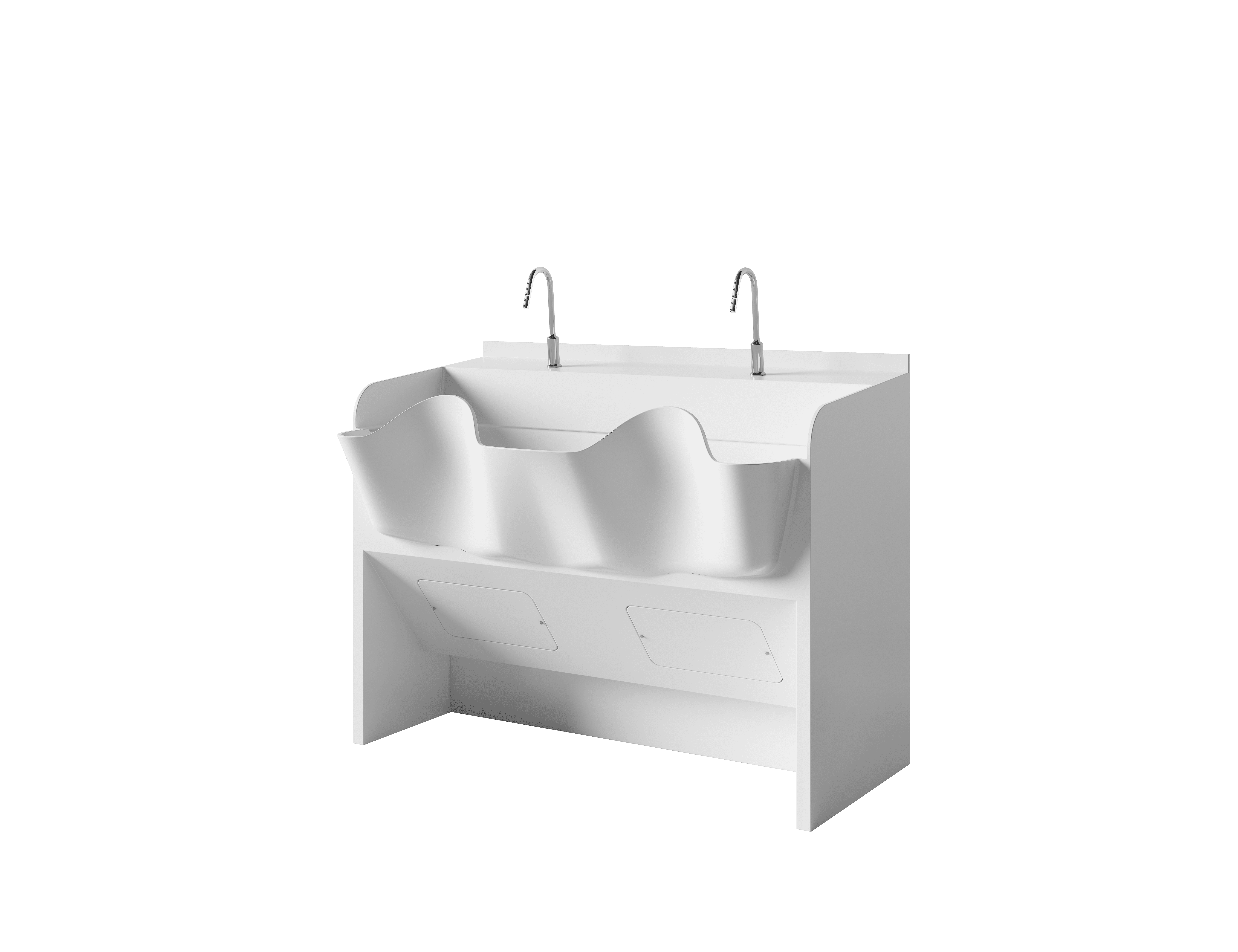
Corian Surgical Sink Faucet Troubleshooting: Sensor & Thermostatic Field Guide
Most surgical sink faucet troubleshooting comes down to four checkpoints: power, sensing, water supply, and the solenoid valve. On Corian surgical sinks fitted with sensor or thermostatic faucets, thermostatic faults usually trace back to pressure imbalance or debris in the valve. This guide walks installers, maintenance engineers, and facility teams through every common fault — symptom, cause, and fix — so most issues can be resolved on site without replacing the unit.
- No response: check power light, then listen for the solenoid click.
- Weak or strong flow: adjust angle valve, clean inlet filter screen.
- Dripping when off: flush debris from the solenoid valve seal.
- Temperature swings: unstable pressure — fit a pressure-regulating valve.
- False triggering: tilt the sensor about 45° to the basin.
1. Safety Checklist Before You Start
Before any disassembly or diagnostic work, complete these three steps. They protect both the technician and the faucet's electronic components.
- 1Turn off the water supply at the angle valves before disassembly.
- 2Disconnect power or remove batteries before checking wiring and controller connections.
- 3After maintenance, flush the water lines thoroughly to remove debris before reassembly.
2. Sensor Faucet Troubleshooting on Surgical Sinks
Sensor (touchless) faucets have four functional blocks: the infrared sensor, the controller, the solenoid valve, and the water supply. Diagnosing in that order isolates most faults in minutes.
2.1 Water flow too strong or too weak
Flow problems are almost always supply-side, not electronic. Check the water pressure and adjust the angle valve accordingly, then inspect the inlet hose filter screen for blockages — sediment on the screen is the most frequent cause of weak flow.

2.2 Adjusting water temperature
Outlet temperature on a sensor faucet is set mechanically. Use a flat-head screwdriver to adjust the mixing valve, which balances hot and cold water intake.

2.3 Overly sensitive or poor sensing range
Sensing distance is adjustable. Remove the white cover to access the blue cross knob:
- Clockwise — increases the sensing distance.
- Counterclockwise — decreases the sensing distance.

2.4 Sensor not responding
When a sensor faucet stops responding entirely, the fault is either the sensor, the signal wiring, or the controller. Work through this sequence:
- 1Verify sensor power — the red indicator light should be visible.
- 2Wave a hand near the sensor and listen for the solenoid valve's click. A click means the sensor and controller are working; the fault is downstream.
- 3Inspect the sensor wiring at the faucet base for disconnection.
- 4Check that the controller's signal wire is intact.
2.5 Unintended activation (sensor angle)
False triggering is usually an installation-angle issue, not a hardware fault:
- Sensor facing the basin directly → frequent unintended triggering.
- Sensor mounted horizontally → contaminants can drip onto the countertop.
- Recommended: tilt the sensor approximately 45° relative to the basin.
2.6 Faucet runs without power
If water flows with no power connected, the controller was most likely left in the open position before installation. Reconnect power and test — the controller will reset the valve state.
2.7 Dripping when the faucet is off
Cause: debris lodged in the solenoid valve prevents a tight seal. Fix: flush the valve several times with water. If dripping persists after flushing, dismantle the valve or replace the controller.
3. Thermostatic Faucet Troubleshooting on Surgical Sinks
Thermostatic faucets depend on balanced hot and cold supply pressure. Most temperature and flow faults trace back to the supply lines rather than the thermostatic cartridge itself.
3.1 Low water flow
Possible causes: a clogged water pipe, low water pressure or an imbalanced hot/cold supply, or a temperature setting so high that the hot water supply cannot keep up. Check the hot water angle valve first and adjust the flow rate.
3.2 No water when the handle is turned left or right
| Handle position | Symptom | Likely cause |
|---|---|---|
| Left (hot side) | No water | Hot water pipe blockage (short side) |
| Right (cold side) | No water | Cold water pipe blockage (long side) |
Clear the blockage on the affected side based on usage preference.
3.3 Temperature fluctuation on the display
Cause: unstable supply pressure. Fix: install a pressure-regulating valve on the supply line. Where higher precision is required — such as clinical hand-wash stations — use a constant-pressure device.


3.4 Pull-down spray head sticks or fails to retract
- Counterweight mounted too low → insufficient retraction force. Reposition it higher on the hose.
- Counterweight movement obstructed → check for interference inside the cabinet.
- Improper faucet mounting → the bracket may pinch the pull-out hose; adjust the bracket position.
3.5 Slow drainage
Slow drainage at the basin has two typical causes: a clogged drainpipe, or an improper S-trap height difference that leaves insufficient drainage pressure. Verify the trap geometry before assuming a blockage.
3.6 Crossflow of hot and cold water
Cause: debris blocking the thermostatic valve's sealing ring allows hot and cold streams to mix upstream. Fix: clean the inlet solenoid valve and flush the lines.
- Uncontrolled mixing defeats anti-scald protection at patient and staff hand-wash points.
- Backflow between hot and cold lines can compromise water system hygiene management.
- Persistent crossflow after cleaning indicates a worn sealing ring — replace rather than re-flush.
4. Quick Reference: Symptom → Fix
| Symptom | Most likely cause | First action |
|---|---|---|
| Sensor not responding | Power, wiring, or controller | Check red light → solenoid click test |
| Weak flow | Blocked inlet filter screen | Clean filter, adjust angle valve |
| Dripping when off | Debris in solenoid valve seal | Flush valve repeatedly |
| False triggering | Sensor angle | Tilt sensor ~45° to basin |
| Runs without power | Controller left open | Reconnect power and test |
| Temperature fluctuation | Unstable supply pressure | Fit pressure-regulating valve |
| Hot/cold crossflow | Debris on sealing ring | Clean inlet solenoid valve |
| Spray head won't retract | Counterweight position | Reposition counterweight |
5. When to Escalate to Support
Escalate rather than continue on-site repair when: dripping persists after repeated solenoid flushing, crossflow returns after cleaning the sealing ring, or the controller shows no response with confirmed power and intact wiring. In these cases the controller or cartridge should be replaced — attempting further disassembly risks voiding the warranty.
For project-level installations, keeping one spare controller and solenoid valve per 20 installed units is a practical maintenance stock ratio for facility teams.
6. Frequently Asked Questions
First verify power — the red indicator light should be visible. Then wave a hand near the sensor and listen for the solenoid valve click. If there is no click, inspect the sensor wiring at the faucet base and the controller's signal wire. If there is a click but no water, check the supply and valve for blockage.
Debris in the solenoid valve prevents a tight seal. Flush the valve multiple times with water. If dripping continues, dismantle the valve or replace the controller.
Tilt the sensor approximately 45° relative to the basin. A sensor facing the basin directly triggers unintentionally, and horizontal mounting can allow contaminants to drip onto the countertop.
Unstable supply water pressure is the usual cause. Install a pressure-regulating valve on the supply line; for higher precision applications, use a constant-pressure device.
Debris blocking the thermostatic valve's sealing ring allows hot and cold streams to mix. Clean the inlet solenoid valve and flush the lines. If crossflow returns after cleaning, the sealing ring is worn and should be replaced.
Need help with a faucet fault on site?
Send the symptom and a short video to the ICARELIFE support team. Most issues are resolved remotely within one working day — spare controllers and solenoid valves ship worldwide.