How to Choose a Modular Operating Theater Supplier
Six evaluation criteria from the manufacturer side of the table — engineering capability, manufacturing control, references, validation support, after-sales reality, and commercial transparency.
Why the evaluation process matters more than the brochure
Most supplier problems show up after delivery, not before. The shop drawings arrive late, the door does not seal against a wall system it was not designed for, the validation documentation does not match what the health authority asked for, and the replacement HEPA filter has a twelve-week lead time. Every one of these is an evaluation-stage failure, not a manufacturing one.
This guide is written from the manufacturer side of that conversation — the six criteria that separate a project partner from a transactional vendor, and the questions that expose each one early.
The six evaluation criteria
Engineering capability
Ask for a sample shop drawing and submittal package before anything else. A capable supplier produces coordinated drawings across wall, ceiling, door, and services — not just a catalogue. If they cannot show an airflow calculation or a compliance matrix against your referenced standard, no other criterion matters.
Manufacturing control
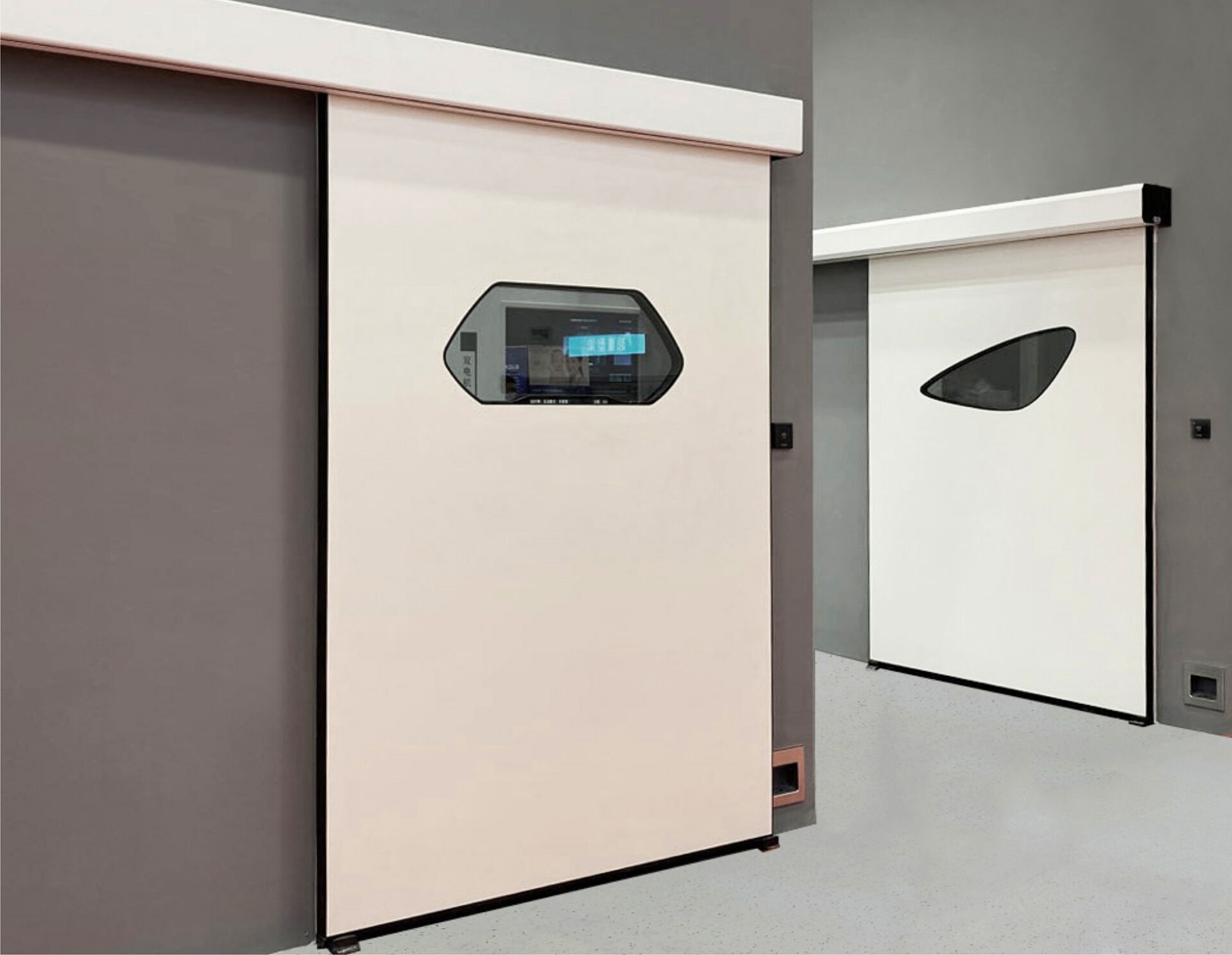
Does the supplier manufacture the panels, doors, and ceiling modules, or assemble third-party parts? Ownership of the interfaces matters: when a door does not seal against a wall system, you need one responsible party, not two vendors pointing at each other.
References in your market
Delivered installations in countries with similar standards regimes — and similar approval processes — beat impressive-but-irrelevant references. Ask for projects comparable to yours in room count, cleanliness class, and delivery terms.
Validation and commissioning support
Confirm in writing who provides HEPA integrity testing, pressure differential commissioning, and air change rate verification — and who signs the documentation your health authority expects. Suppliers that treat validation as the contractor's problem are transferring risk to you.
After-sales reality
Three questions expose this quickly: What is the lead time on a replacement HEPA filter or door motor? What does the warranty actually cover, with what response commitment? Can the control panel be diagnosed remotely? Spare parts and support define total cost of ownership more than the initial price.
Commercial transparency
Insist on a line-item bill of quantities with itemized specifications, a clear currency, stated Incoterms, and milestone payments. Lump-sum quotations are where scope disputes are born.
Quick evaluation checklist
| Criterion | Ask for | Red flag |
|---|---|---|
| Engineering | Sample shop drawing, compliance matrix | “We send drawings after order” |
| Manufacturing | Factory QC reports, inspection invitation | No third-party inspection allowed |
| References | Projects in similar markets | Only domestic or unverifiable references |
| Validation | Test protocols and responsibility split | “Validation is contractor scope” |
| After-sales | Spare parts list, warranty terms | Vague or verbal-only commitments |
| Commercial | Line-item BOQ, Incoterms | Lump sum with itemized exceptions |
Frequently asked questions
What should a supplier RFP include?
Room layout, referenced standards, target cleanliness class, delivery terms, and required submittals — datasheets, certificates, method statements, warranties. The more defined the scope, the more comparable the quotations you receive.
How many suppliers should we evaluate?
Three is usually right: enough for genuine comparison, few enough to go deep on engineering review and reference checks for each.
What documents prove a supplier can meet our standards?
A clause-by-clause compliance statement against your referenced standards, product certificates for major components, factory QC procedures, and validation protocols — ideally from a project comparable to yours.
Related guides
- Modular Operating Theater: The Complete Guide — system fundamentals, components, standards, and cost
- Modular OT market explained — a global survey of players and solution models
- Why you should not build a modular operating theater — the contrarian checklist before you commit
Conclusion
The right modular OT supplier is the one whose engineering holds up under review, whose references survive verification, and whose obligations are written down before the order is placed. Evaluate on those six criteria, weight engineering capability and validation responsibility first, and the commercial terms will usually take care of themselves.
Evaluating modular OT suppliers for a tender?
Send your project specification — ICARELIFE responds with a clause-by-clause compliance statement and a line-item DDP quotation.
Contact ICARELIFE →